Advanced Keto Food List for Nutritionally Balanced Meals
Following keto can look ridiculously simple from the outside: cut carbs, eat more fat, and somehow everything falls into place. In reality, building a keto diet that is actually nutritious takes more thought than filling your plate with bacon, cheese, butter, and eggs.
A well-designed advanced keto food list should help you stay within a low-carbohydrate eating pattern while still providing protein, fiber, healthy fats, vitamins, minerals, and enough variety to keep meals enjoyable.
That matters because highly restrictive keto diets can make it harder to obtain certain nutrients if food choices become too narrow.
Recent research examining ketogenic meal plans has highlighted fiber, vitamin D, some B vitamins, potassium, and zinc as nutrients that may require particular attention.
So instead of asking only, “Is this food keto?” it is more useful to ask, “What does this food add to my meal?”
Here is how to build a smarter keto food list around that idea.
1. Start With Nutrient-Dense Low-Carb Vegetables
Vegetables should not become an afterthought just because you are eating keto. In fact, non-starchy vegetables are among the most useful foods for making ketogenic meals more nutritionally complete.
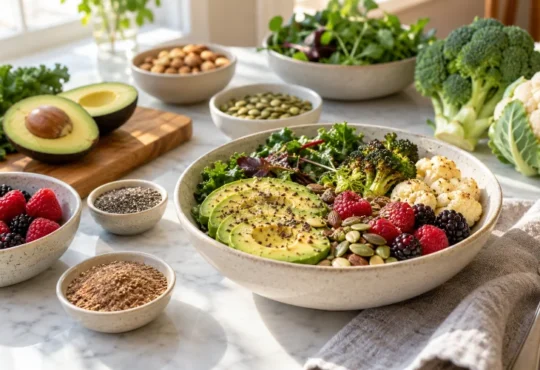
Leafy greens such as spinach, kale, bok choy, lettuce, and Swiss chard provide valuable micronutrients with relatively few carbohydrates.
Broccoli, cauliflower, asparagus, mushrooms, cucumber, zucchini, celery, peppers, and Brussels sprouts are also common low-carb options. Harvard’s keto diet review specifically identifies many of these non-starchy vegetables as foods that can fit within ketogenic eating patterns.
Rather than adding a few decorative leaves next to a steak, consider making vegetables a substantial part of the plate.
For example, grilled salmon can be paired with roasted broccoli and a spinach-avocado salad. An omelet becomes more nutritionally interesting when you add mushrooms, peppers, spinach, herbs, and a side of cucumber.
The goal is variety. Different vegtables bring different nutrients, textures, and flavors to your meals.
2. Choose Protein for Quality, Not Just Carb Count
Chicken, beef, eggs, fish, seafood, pork, and many cheeses are naturally low in carbohydrates, which makes them obvious keto staples. But “almost zero carbs” does not automatically mean “best choice every day.”
Protein helps support muscle tissue, recovery, enzymes, hormones, and satiety. On a traditional ketogenic diet, however, protein intake is usually moderate rather than unlimited.
Harvard notes that popular ketogenic approaches often provide roughly 10–20% of calories from protein, although individual requirements vary.
A better strategy is to rotate protein sources.
Eggs may work for breakfast, chicken or tofu for lunch, and salmon or sardines for dinner. Beef and pork can still fit, but they do not need to dominate the entire week.
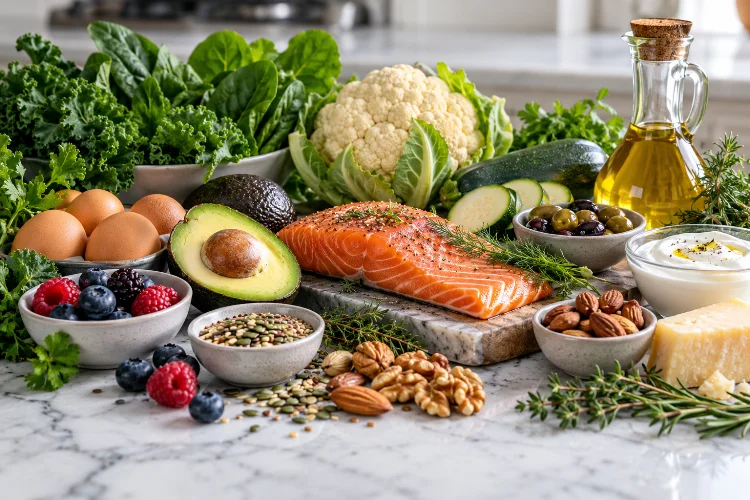
Fatty fish deserves particular attention because it combines protein with unsaturated fats. Salmon, sardines, trout, and mackerel can help make a keto meal more nutrient-dense without requiring piles of butter or processed meat.
3. Build Your Fat Intake Around Unsaturated Fats
Fat is central to a ketogenic diet, but the type of fat matters.
It is easy to interpret keto as permission to add butter, cream, bacon, and fatty meat to every meal. A better long-term approach is to rely heavily on foods such as extra-virgin olive oil, avocado, nuts, seeds, and oily fish.
Harvard specifically recommends emphasizing unsaturated fats rather than building a ketogenic diet mainly around saturated fat. Mayo Clinic similarly advises limiting saturated and trans fats when following low-carbohydrate diets.
Try drizzling olive oil over roasted cauliflower, adding avocado to eggs, sprinkling pumpkin seeds over salads, or using walnuts as a crunchy topping.
This small shift can dramatically improve the overall fat balnce of a keto meal without making the diet complicated.
4. Do Not Forget Fiber on Keto
Fiber can become one of the trickier parts of ketogenic eating because many traditional high-fiber foods – including whole grains, beans, and several fruits – are heavily restricted.
That does not mean fiber should disappear.
Low-carb vegetables, avocado, chia seeds, flaxseed, almonds, walnuts, and certain berries can all help increase fiber while keeping carbohydrate intake controlled.
This matters because constipation is one of the commonly reported short-term problems associated with very-low-carbohydrate diets.
A simple breakfast could include unsweetened Greek yogurt, chia seeds, walnuts, and a modest serving of berries, depending on your carbohydrate target.
For lunch, try leafy greens with avocado, grilled chicken, cucumber, pumpkin seeds, olive oil, and lemon.
Think beyond “net carbs” as well. Harvard points out that the term is not officially regulated and calculations involving fiber and sugar alcohols do not always predict metabolic effects perfectly.
5. Use Nuts, Seeds, and Dairy Strategically
Nuts and seeds are extremely convenient keto foods, but portion size still matters.
Macadamias, walnuts, pecans, almonds, chia seeds, flaxseed, pumpkin seeds, and hemp seeds provide combinations of fat, protein, fiber, vitamins, and minerals. They work particularly well as toppings or small snacks rather than something eaten mindlessly from a large bag.
Dairy also deserves some thought.
Hard cheeses and lower-carbohydrate dairy products may fit easily into ketogenic meal plans, while milk and sweetened yogurt contain more carbohydrate from lactose or added sugars.
Instead of treating cheese as the main ingredient in every meal, use it to add flavor. A little Parmesan over zucchini, feta in a salad, or cheddar in an omelet is usually more useful than designing an entire diet around dairy fat.
This keeps meals more varied and nutrtionally interesting.
6. Keep Smart Low-Carb Extras in Your Food List
A good advanced keto food list includes more than protein, vegetables, and oils.
Fresh herbs, spices, garlic, vinegar, mustard, lemon or lime in controlled portions, unsweetened tea, coffee, cocoa, olives, and fermented foods can make restrictive eating much easier to enjoy.
Small portions of berries may also fit some ketogenic plans. Their carbohydrate content means portion control matters, but they can provide flavor and nutritional variety that a meat-and-cheese-heavy menu lacks.
The practical trick is to make your kitchen flavorful enough that healthy keto food does not feel repetitive.
Roasted cauliflower with olive oil, garlic, paprika, and herbs feels completely different from cauliflower cooked with coconut milk and curry spices—even though the base ingredient is the same.
7. Build a Balanced Keto Plate Instead of Chasing Perfect Macros
Many standard ketogenic diets keep carbohydrate intake below about 50 grams per day, although individual targets and therapeutic ketogenic protocols can be significantly different.
Still, obsessing over percentages can distract from food quality.
A Simple Keto Meal Formula
Start with a quality protein such as eggs, fish, chicken, tofu, or meat. Add a generous amount of non-starchy vegetables. Then include a primarily unsaturated fat source such as olive oil, avocado, nuts, or seeds.
For example, dinner might be baked salmon with asparagus, cauliflower mash, leafy greens, avocado, and an olive-oil dressing.
Lunch could be chicken lettuce wraps with cucumber, avocado, herbs, seeds, and a creamy unsweetened yogurt dressing.
The formula is flexible enough to create dozens of meals without eating the same foods over and over. That variety is especially usefull when a diet already excludes several major food groups.
An advanced keto food list should do more than tell you which foods contain the fewest carbohydrates. The real goal is to create meals that provide quality protein, fiber-rich vegetables, healthy fats, minerals, vitamins, and enough variety to remain practical.
Prioritize non-starchy vegetables, seafood, eggs, quality proteins, olive oil, avocado, nuts, seeds, and carefully selected dairy rather than relying heavily on processed meats, butter, and cheese.
Keto is also highly restrictive, and long-term effects remain an area of ongoing research. People with medical conditions or those taking medications—particularly for diabetes—should discuss major dietary changes with a qualified healthcare professional or registered dietitian.
Ready to improve your keto routine? Start by reviewing your next meal and ask one simple question: Does this plate offer real nutrition, or is it merely low in carbs?