Understanding Hidden Carbohydrates in Everyday Packaged Foods
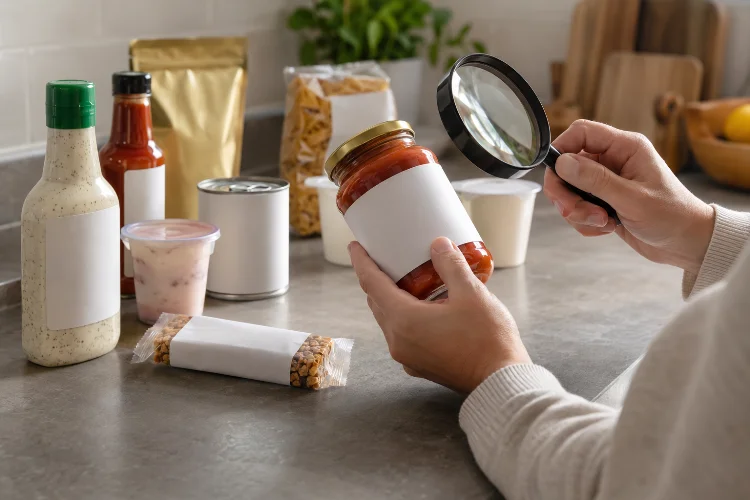
You grab a bottle of salad dressing, a protein bar, or a jar of pasta sauce and assume it cannot contain many carbohydrates. After all, none of those foods look like bread, rice, pasta, or dessert.
Then you check the Nutrition Facts label.
Suddenly, those everyday products are adding far more carbs than expected.
This is why understanding hidden carbohydrates in everyday packaged foods can make such a big difference, especially if you follow a low-carb diet, track blood glucose, or simply want to know what you are actually eating.
“Hidden” does not necessarily mean manufacturers are secretly adding carbohydrates. Usually, the information is available on the package, but carbs can appear through added sugars, starches, milk ingredients, sauces, coatings, or surprisingly small serving sizes.
Marketing claims can make things even more confusing. “Sugar-free,” “natural,” and “no added sugar” may sound reassuring, but none automatically means carbohydrate-free.
Fortunately, you do not need to become a food scientist. You just need to know where to look.
1. Total Carbohydrate Matters More Than the Word “Sugar”
One of the easiest mistakes is checking only the sugar line on a nutrition label.
The FDA’s Nutrition Facts label lists Total Carbohydrate, which includes different types of carbohydrate found in the food. Dietary fiber, total sugars, added sugars, and sometimes sugar alcohols are shown beneath that larger carbohydrate category.
So imagine a packaged product with 18 grams of total carbohydrate but only 3 grams of sugar.
Looking only at those 3 grams could make the product seem extremely low-carb. The remaining carbohydrate may come from starch, fiber, sugar alcohols, or other carbohydrate-containing ingredients.
This becomes especially important with crackers, sauces, protein snacks, bread substitutes, frozen meals, and processed meat products containing fillers.
Start With the Big Number
When evaluating a packagd food, look at Total Carbohydrate per serving first.
Then examine fiber, sugars, added sugars, and the ingredient list to understand where those carbohydrates are coming from.
That simple order prevents a lot of confusion.
2. Added Sugar Hides in Foods That Do Not Taste Like Dessert
Most people expect added sugar in cookies and soda. It becomes less obvious in foods that taste savory.
Ketchup, barbecue sauce, pasta sauce, salad dressing, marinades, flavored yogurt, breakfast cereal, sandwich bread, and some packaged soups can all contain added sweeteners.
The CDC specifically notes that sugar may appear in unexpected savory foods such as pasta sauce, while Harvard highlights cereals and yogurt as less obvious contributors to added sugar intake.
Fortunately, U.S. Nutrition Facts labels now make this easier to identify.
Under Total Sugars, you will find a separate line showing Added Sugars. The FDA explains that added sugars include ingredients such as sucrose and dextrose, as well as sugars from syrups, honey, and concentrated fruit or vegetable juices.
That means a product can contain naturally occurring sugar and added sugar at the same time.
Plain yogurt, for example, naturally contains lactose. A flavored version may contain that same lactose plus additional sweetener.
3. Learn the Many Names Used for Sweeteners
Ingredient lists are where things become more interesting.
Manufacturers do not have to use the word “sugar” every time a sweet ingredient appears. You might instead see glucose, dextrose, fructose, corn syrup, malt syrup, molasses, honey, agave nectar, maple syrup, fruit juice concentrate, or several other names.
Harvard notes that ingredients are listed in descending order by weight, meaning ingredients used in larger amounts generally appear earlier in the list.
However, one product can contain several types of sweeteners.
For example, instead of seeing “sugar” near the beginning, you might see corn syrup in one position, fruit concentrate later, and molasses farther down.
Individually they may look less dramatic, but together they still contribute carbohydrates and added sugars.
This is why reading the entire ingredient list can reveal more than simply scanning the first three ingredients.
4. Starches Can Add Carbs Without Making Food Taste Sweet
Sugar gets most of the attention, but starch can be an equally important source of hidden carbohydrates.
Modified food starch, corn starch, potato starch, rice flour, wheat flour, tapioca starch, and similar ingredients may be used as thickeners, coatings, binders, or texture enhancers.
You can find them in foods that people do not immediately associate with carbs.
A creamy soup might use starch to create thickness. A packaged gravy can contain flour. Meatballs may include breadcrumbs. Some sausages and deli products use carbohydrate-containing fillers, while breaded chicken obviously adds another layer of starch.
Even seasoning mixtures can occasionally contain small amounts of starch or sugar.
None of these ingredients automatically makes a product “bad.” The point is that carbohydrates are not limited to foods that taste sweet.
If carbohydrate intake matters to you, the Nutrition Facts panel tells you far more than your taste buds can.
5. Serving Size Can Completely Change the Carb Count
Here is one of the oldest label-reading traps: a package looks like one portion but actually contains multiple servings.
According to the FDA, serving size is based on the amount people typically consume; it is not a recommendation for how much you should eat. A single package may also contain more than one serving.
Suppose a snack contains 12 grams of carbohydrates per serving.
Not terrible.
But if the bag contains three servings and you casually finish the whole thing, you have consumed 36 grams.
The same problem can occur with sauces.
A label may show only a few grams of carbs for one tablespoon, while your actual pour is closer to three or four tablespoons.
Whenever the carb number looks suspiciously low, check the serving size before celebrating.
Compare What You Eat, Not Just What the Label Shows
Think about your normal portion.
If you routinely eat twice the labeled serving, double the carbohydrates too. This tiny calculation creates a much more realistic picture of your actual intake.
6. “Sugar-Free” Does Not Automatically Mean Carb-Free
Front-of-package claims deserve special attention.
Under FDA rules, a food labeled “sugar free” generally contains less than 0.5 gram of sugars per reference amount and labeled serving. But that claim refers specifically to sugars—it does not guarantee zero total carbohydrates.
The American Diabetes Association makes the distinction even clearer: claims such as “sugar-free,” “reduced sugar,” or “no sugar added” do not necessarily mean a product contains no carbohydrates or even fewer total carbs than the standard version.
A sugar-free cookie is a perfect example.
Removing table sugar does not magically remove flour, starch, milk ingredients, or sugar alcohols.
Similarly, “no added sugar” simply means qualifying sugar-containing ingredients were not added during processing. The product may still naturally contain sugars or other carbohydrates.
So treat marketing language as a clue, not the final answer.
Turn the package around and read the actual numbers.
7. Sugar Alcohols Make Low-Carb Labels More Complicated
Sugar alcohols commonly appear in sugar-free candy, protein bars, cookies, chewing gum, and other reduced-sugar products.
Examples include erythritol, maltitol, sorbitol, xylitol, mannitol, and lactitol. The FDA classifies sugar alcohols as carbohydrates, although they differ from traditional sugars in how they are metabolized.
This is where claims about “net carbs” can become confusing.
Some manufacturers subtract fiber and certain sugar alcohols from total carbohydrate when advertising a net-carb figure. But the Nutrition Facts label still provides the best standardized starting point for understanding the product.
Individual sweeteners also behave differently in the body, so treating every sugar alcohol as nutritionally identical can be overly simplistic.
If you are carefully controlling carbohydrates for diabetes or another medical reason, relying only on a front-of-package “net carb” claim may not give you the complete picture.
8. Watch for the “Health Halo” on Packaged Foods
Some products simply look healthy.
Words such as “protein,” “whole grain,” “organic,” “natural,” “gluten-free,” or “made with real fruit” can create what nutrition researchers sometimes call a health halo.
Yet none of those descriptions automatically means a food is low in carbohydrates.
Harvard notes that positive front-of-package claims can sometimes cause consumers to view a product as healthier without examining less favorable parts of its nutriton profile.
A granola marketed as natural can still contain substantial sugar. Gluten-free crackers may rely heavily on rice or potato starch. A protein bar may contain enough carbohydrate to resemble a small dessert.
Even foods marketed specifically to low-carb shoppers deserve a label check.
The front of the box is marketing.
The Nutrition Facts panel is where the useful numbers live.
9. A Simple System for Finding Hidden Carbs
You do not need to analyze every ingredient for ten minutes in the supermarket.
Use a quick sequence.
First, check the serving size. Next, look at Total Carbohydrate. Then examine fiber, Total Sugars, and Added Sugars before scanning the ingredient list for sweeteners, flour, starch, syrups, and fillers.
If you are comparing two similar products, compare equal portions rather than whatever serving sizes each brand chooses.
For added sugars specifically, the Nutrition Facts label also provides a % Daily Value. Harvard notes that 5% DV or less per serving is considered low, while 20% DV or more is considered high.
After a few grocery trips, this process becomes surprisingly quick.
You start noticing unexpected carboydrates almost automatically.
Understanding hidden carbohydrates does not require avoiding every packaged food in the supermarket. It simply means knowing that carbs can come from more places than obvious sugar.
Added sweeteners can appear in savory sauces. Starches can hide in soups, coatings, and processed foods. Serving sizes can make the numbers look smaller than your actual intake, while claims such as “sugar-free” and “no added sugar” do not necessarily mean carbohydrate-free.
The easiest solution is also the most practical: turn the package around.
Check serving size, Total Carbohydrate, fiber, sugars, added sugars, and the ingredient list before relying on marketing claims.
Try this on your next grocery trip: compare two versions of one everyday product – such as yogurt, dressing, or pasta sauce. You may be suprised how different their carbohydrate profiles really are.