Best High-Fibre Low-Carb Foods for Balanced Keto Meal Plans
A ketogenic diet can make cutting carbohydrates surprisingly straightforward. Bread, pasta, rice, sugary drinks, and most sweets quickly disappear from the menu. Getting enough fibre, however, can become much more complicated.
Many traditional fibre-rich foods – including whole grains, beans, lentils, and several fruits – also contain enough carbohydrates to make them difficult to fit into stricter keto plans.
That can leave people eating plenty of meat, eggs, cheese, and added fat while vegetables, seeds, nuts, and other plant foods slowly disappear from the plate.
Finding the best high-fibre low-carb foods for balanced ketogenic meal plans helps solve that problem.
The goal is not simply to stay under a carbohydrate limit. It is to build meals that also provide fibre, micronutrients, healthy fats, and enough variety to remain enjoyable.
The FDA uses 28 grams of dietary fibre per day as the Daily Value on Nutrition Facts labels, although individual needs vary.
Fortunately, several keto-friendly foods can make reaching a reasonable fibre intake much easier.
Why Fibre Can Be Tricky on a Ketogenic Diet
Ketogenic diets usually restrict many foods that are common sources of fibre.
Harvard’s Nutrition Source notes that most keto plans sharply limit grains, legumes, starchy vegetables, and most fruits.
At the same time, it recommends including permitted vegetables, nuts, seeds, and small portions of certain fruits to reduce the risk of inadequate fibre and micronutrient intake.
This matters because extremely low-carbohydrate diets can sometimes contribute to constipation and digestive problems.
Mayo Clinic lists constipation among the possible short-term effects of major carbohydrate restriction and notes that very restrictive diets may provide too little fibre.
The solution is not necessarily eating more carbohydrate. It is choosing carbohydrates more strategically.
Foods that combine plenty of fibre with relatively modest digestible carbohydrate are especially useful.
1. Chia Seeds: Small Seeds With Serious Fibre
Chia seeds are probably one of the easiest ways to increase fibre without dramatically increasing a meal’s carbohydrate load.
According to Cleveland Clinic, two tablespoons of chia seeds provide about 10 grams of fibre. That is a substantial amount from a very small serving.
Chia also contains plant-based omega-3 fat in the form of alpha-linolenic acid, or ALA. Because the seeds absorb liquid and develop a gel-like texture, they work well in unsweetened chia pudding, yogurt, smoothies, or homemade low-carb breakfast bowls.
For a simple keto breakfast, combine chia seeds with unsweetened almond milk, a few raspberries, cinnamon, and chopped walnuts.
One practical warning: suddenly adding large quantities of fibre can create bloating or discomfort. Increase your intake gradually and drink enough fluids.
2. Ground Flaxseed: An Easy Addition to Everyday Meals
Flaxseed is another excellent option for boosting fibre without turning your meal into a carbohydrate-heavy dish.
Cleveland Clinic reports that one tablespoon of ground flaxseed provides around 3 grams of fibre, along with protein and plant compounds.
Ground flax is generally more practical than whole flaxseed because you can easily mix it into foods. Add a spoonful to plain Greek yogurt, low-carb smoothies, chia pudding, homemade keto bread, or even a bowl of cauliflower soup.
It also works surprisingly well as part of a low-carb coating for fish or chicken when mixed with herbs and finely chopped nuts.
Like chia, flaxseed is quite concentrated, so more is not always better. Introducing it gradually is usually more comfortable for digestion.
3. Avocado: Fibre Plus Healthy Unsaturated Fat
Avocado fits keto unusually well because it provides something many foods do not: meaningful fibre and plenty of unsaturated fat in the same package.
The American Heart Association specifically recommends avocado as a way to add healthy fats, fibre, vitamins, and minerals to an eating pattern.
That combination makes avocado more nutrtionally useful than simply adding extra butter or cream when you need more fat.
Half an avocado can turn eggs into a more balanced breakfast. Sliced avocado works well in chicken salads, lettuce wraps, taco bowls, and salmon dishes.
You can also mash it with lime, herbs, and seasoning to create a simple dip for cucumber, celery, or bell pepper.
From a keto perspective, avocado is particularly useful because much of its carbohydrate content comes from fibre, which is why it regularly appears in low-carb meal plans.
4. Almonds and Other Nuts: Fibre With Built-In Portion Control
Nuts are another convenient way to combine fibre, fat, and some protein.
Cleveland Clinic estimates that roughly 23 almonds provide about 3.5 grams of fibre. The American Heart Association also highlights nuts and seeds as sources of unsaturated fats, protein, energy, and fibre.
Almonds, pecans, walnuts, and macadamia nuts can all work in ketogenic meal plans, although their carbohydrate profiles differ.
The biggest issue is portion size.
Eating a measured handful of almonds is very different from keeping a large bag beside your desk and finishing half of it without noticing. Nuts are calorie-dense, so portions can climb quickly even when carbohydrates remain relatively low.
Use them as toppings rather than endless snacks. Chopped walnuts over yogurt or almonds over a leafy salad can add texture while keeping the meal satifsying.
5. Leafy Greens: Low-Carb Volume for Everyday Meals
Spinach, kale, Swiss chard, lettuce, bok choy, and collard greens are some of the most practical vegetables for ketogenic eating.
Harvard includes leafy greens among the non-starchy vegetables typically permitted on keto plans.
They may not deliver as much fibre in a tablespoon-sized serving as chia seeds, but that is not really the point. Greens provide volume, micronutrients, and fibre while contributing relatively little carbohydrate.
They also make meals feel like actual meals instead of combinations of protein and fat.
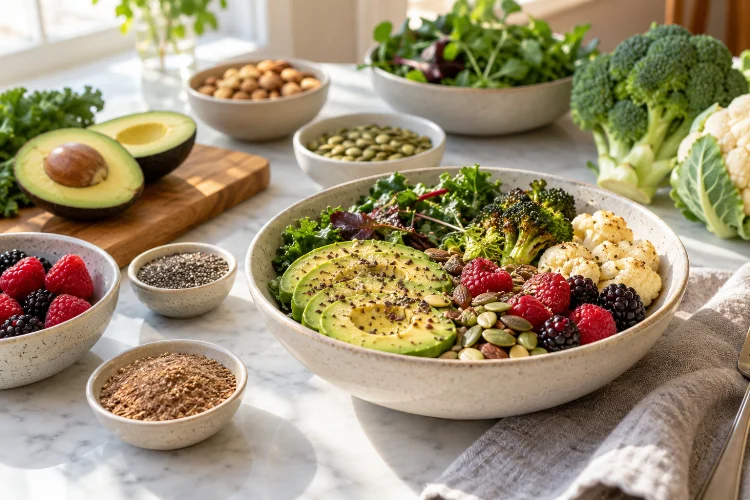
Try making half of your lunch bowl leafy vegtables, then add grilled chicken, avocado, pumpkin seeds, cucumber, and an olive-oil dressing.
For dinner, sauté spinach with garlic and olive oil alongside salmon or eggs.
The more vegetables you can comfortably fit within your carbohydrate target, the easier it becomes to build a varied keto diet.
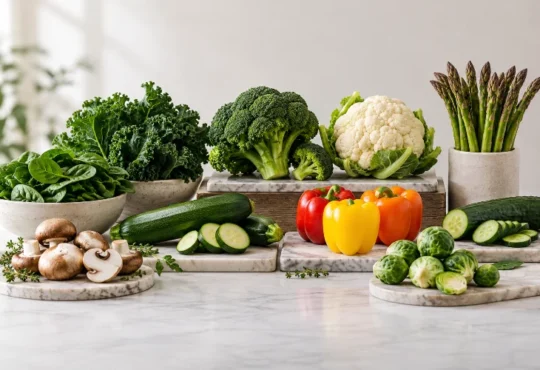
6. Broccoli, Cauliflower, and Brussels Sprouts
Cruciferous vegetables deserve their own category because they are incredibly useful for low-carb cooking.
Broccoli, cauliflower, and Brussels sprouts all provide fibre while staying significantly lower in carbohydrate than foods such as potatoes, rice, or pasta. Harvard includes broccoli, cauliflower, and Brussels sprouts among common non-starchy vegetables used in ketogenic diets.
Cauliflower is particularly versatile.
You can turn it into cauliflower rice, mash it as a potato substitute, roast it until crispy, or blend it into a creamy soup.
Broccoli works well steamed or roasted with olive oil, while Brussels sprouts become much more interesting when roasted with herbs, nuts, or Parmesan.
These foods also solve an important keto problem: meal volume. A plate with steak and butter may technically fit keto macros, but adding two cups of roasted vegetables makes it much more balanced and visually satisfying.
7. Berries Can Fit When Portions Are Controlled
Fruit is often heavily restricted on ketogenic diets, but not every fruit needs to disappear completely.
Harvard notes that small portions of berries can fit into some ketogenic plans because they generally have fewer net carbohydrates than many other fruits.
Raspberries and blackberries are particularly popular because they provide fibre alongside their natural sweetness.
The key is portion control.
A small handful mixed into plain Greek yogurt with chia seeds is very different from eating a huge smoothie bowl containing several cups of fruit.
Berries can also make keto eating feel less restrictive. Their colour, acidity, and sweetness provide variety without requiring sugary desserts.
Think of them as a garnish or supporting ingredient rather than the foundation of the meal.
Build Fibre Into Every Keto Meal
Trying to get your entire day’s fibre at dinner is not very practical.
A better strategy is to distribute fibre across meals.
A Simple High-Fibre Keto Day
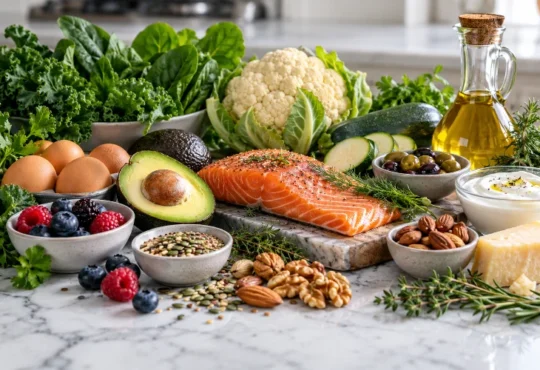
Breakfast might include eggs with avocado and spinach. Lunch could be a chicken salad with leafy greens, cucumber, almonds, avocado, and olive oil.
For a snack, plain Greek yogurt with chia or flaxseed provides another opportunity to add fibre.
Dinner could combine salmon with roasted broccoli and cauliflower, followed by a few raspberries if they fit your carbohydrate target.
This approach also improves nutritional variety. Instead of relying on one “superfood,” you get different types of plant foods throughout the day.
The Mayo Clinic Diet’s healthy keto approach follows a similar philosophy, emphasizing fibre-rich vegetables along with avocado, nuts, seeds, olive oil, berries, and leaner protein choices rather than building keto around bacon, butter, and cream.
Do Not Increase Fibre Too Quickly
More fibre is not automatically better if you increase it overnight.
Cleveland Clinic recommends gradually increasing fibre because adding too much at once may cause bloating and cramping. Drinking sufficient water is also important when increasing fibre intake.
This is especially relevant if your existing ketogenic menu contains almost no plant foods.
Do not suddenly add huge amounts of chia, flax, nuts, and vegetables in one day.
Start with one or two changes, such as adding avocado at breakfast and more vegetables at dinner. Then gradually introduce seeds, nuts, berries, and other fibre-rich foods.
That makes the transition much more convienient for your digestive system.
The best high-fibre low-carb foods for balanced ketogenic meal plans are foods that do more than keep carbs low.
Chia seeds and flaxseed provide concentrated fibre, while avocado combines fibre with unsaturated fat.
Nuts add crunch, healthy fats, and plant nutrients, while leafy greens and cruciferous vegetables create volume and variety. Small portions of berries can contribute additional fibre while making meals more enjoyable.
A balanced ketogenic diet should not revolve entirely around meat, cheese, butter, and oils. Plant foods still matter, especially when grains, legumes, and many fruits are restricted.
Start by adding one fibre-rich food to each meal and increase your intake gradually.
Your next keto meal should not just hit a carb target – make it deliver fibre, variety, and real nutritional value too.