
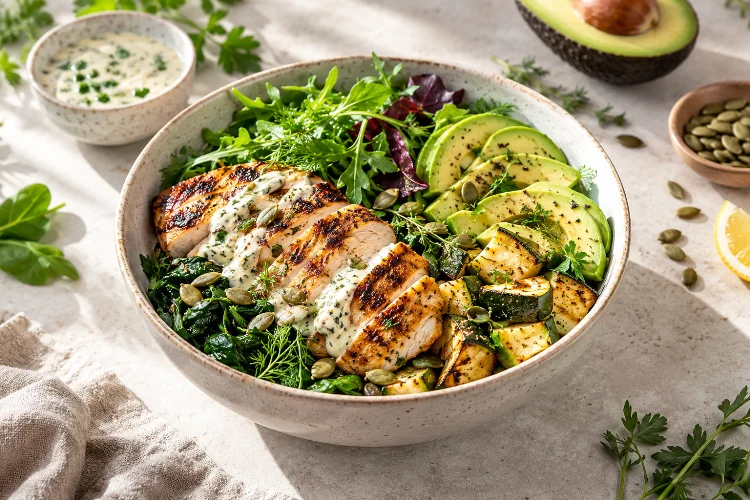
High-Protein Keto Breakfast Bowls With Balanced Low-Carb Ingredients
Breakfast on keto can get repetitive surprisingly fast. Eggs become scrambled eggs, scrambled eggs become omelets, and before long your morning routine feels like an endless rotation of eggs, cheese, and bacon.
That is where high-protein keto breakfast bowls with balanced low-carb ingredients become useful.
Instead of building breakfast around one food, a bowl lets you combine a quality protein source with non-starchy vegetables, healthy fats, fiber-rich toppings, herbs, and sauces.
The result is more interesting and usually more nutritionally complete. There is also an important distinction between keto and simply eating as much protein as possible.
Traditional ketogenic diets are typically very low in carbohydrates, high in fat, and moderate – not unlimited – in protein. Exact ratios vary depending on the individual and type of ketogenic plan.
So the goal here is not to pile huge amounts of meat into a bowl. It is to create satisfying breakfasts where protein, fat, vegetables, and carbohydrates work together.
What Makes a Balanced Keto Breakfast Bowl?
A good breakfast bowl starts with protein but does not end there.
Eggs, plain Greek yogurt, cottage cheese, salmon, chicken, tofu, and leftover seafood can all provide a strong foundation. Harvard includes foods such as fish, poultry, tofu, eggs, nuts, and seeds among useful protein choices.
Next comes the plant portion.
Spinach, mushrooms, zucchini, cauliflower, cucumber, peppers, avocado, and leafy greens can add fiber, potassium, folate, vitamins, and texture without introducing the carbohydrate load of toast, potatoes, or sugary cereal.
Finally, add fat strategically. Avocado, olive oil, walnuts, almonds, chia seeds, pumpkin seeds, or a small amount of cheese can help make the meal more satisfying.
Think of the basic formula as:
Protein + low-carb vegetables + healthy fat + fiber + flavor.
Once you understand that formula, breakfast bowls become almost endlessly customizable.
1. Egg, Salmon, Spinach, and Avocado Bowl
This is one of the easiest combinations when you want something savory and filling.
Start with two or three eggs, then add a modest portion of cooked or smoked salmon. Serve them over sautéed spinach with sliced avocado, cucumber, herbs, and black pepper.
Eggs provide protein along with nutrients including choline, biotin, vitamin A, and antioxidants such as lutein and zeaxanthin. Salmon adds another protein source while bringing unsaturated fats into the meal.
The spinach and cucumber prevent the bowl from becoming nothing but protein and fat.
For extra flavor, add lemon juice, dill, capers, or a drizzle of olive oil rather than relying on a sugary bottled dressing.
The result feels more like a complete meal than three eggs sitting alone on a plate.
2. Greek Yogurt, Chia, Walnut, and Berry Bowl
Not every keto breakfast needs to be savory.
Plain, unsweetened Greek yogurt makes a practical starting point for people who prefer something cool and slightly creamy in the morning. Yogurt provides protein, calcium, phosphorus, and B vitamins, although carbohydrate content varies depending on the type and brand.
Add chia seeds and a few chopped walnuts for texture and fiber. The American Heart Association notes that nuts provide protein, fats, fiber, vitamins, minerals, and antioxidants.
A small serving of raspberries or blackberries can add natural sweetness. Keto plans commonly permit limited portions of berries because they can contain fewer digestible carbohydrates than many other fruits.
Avoid turning the bowl into dessert with honey, granola, maple syrup, or sweetened yogurt.
Cinnamon, vanilla, unsweetened cocoa, and a few berries usually provide enough flavor without drastically increasing the carbohydrate content.
3. Cottage Cheese, Egg, Cucumber, and Seed Bowl
Cottage cheese is often overlooked in keto breakfast ideas, but it can be extremely convienient.
Use plain cottage cheese as the base, then add a sliced boiled egg, cucumber, leafy greens, pumpkin seeds, cracked pepper, and fresh herbs.
You get creaminess without needing a heavy sauce, while the cucumber and greens keep the breakfast fresh.
Cottage cheese products differ considerably in sodium, fat, and carbohydrate content, so checking the Nutrition Facts label is worth the few seconds it takes.
USDA FoodData Central includes multiple cottage cheese varieties, which illustrates how nutritional values can change depending on formulation and milk-fat level.
For additional fat, add avocado or a drizzle of extra-virgin olive oil.
This bowl also works particularly well for meal prep because the egg can be boiled ahead of time and the vegetables require almost no cooking.
4. Chicken, Avocado, and Cauliflower Breakfast Bowl
There is no rule saying chicken belongs only at lunch.
Leftover grilled or roasted chicken can make one of the fastest high-protein keto breakfasts available. Place sliced chicken over cauliflower rice, then add avocado, spinach, mushrooms, and a spoonful of salsa with no added sugar.
Chicken provides a lean protein foundation, allowing you to control the fat quality separately.
That can be useful because a ketogenic diet does not require every source of fat to come from bacon, butter, or fatty cuts of meat. Harvard notes that keto-compatible foods can include unsaturated fat sources such as avocado, nuts, seeds, plant oils, and oily fish.
Try finishing the bowl with olive oil, lime juice, coriander, and pumpkin seeds.
It tastes completely different from a traditional breakfast while still keeping the ingredients simple.
5. Tofu, Mushroom, and Spinach Keto Bowl
A high-protein keto breakfast does not have to revolve around animal products.
Firm tofu can make an excellent savory bowl when combined with mushrooms, spinach, zucchini, sesame seeds, and a small amount of avocado.
Crumble the tofu into a skillet and cook it like scrambled eggs. Add garlic, turmeric, pepper, mushrooms, and spinach for extra flavor and color.
Harvard lists tofu among healthier protein options and recommends varying protein sources rather than depending heavily on red and processed meat.
Carbohydrate content varies between tofu products, so labels still matter.
Avoid sweetened Asian-style sauces, which can quietly introduce sugar. Soy sauce, chili, ginger, sesame oil, herbs, or vinegar can provide plenty of flavor with better control over carbohydrates.
It is a simple way to make a keto menu more diverse and nutrtionally interesting.
6. Build Protein Without Turning Breakfast Into a Meat Mountain
“High protein” can easily become excessive portions of bacon, sausage, and processed meat.
That misses the point.
A better bowl combines enough protein to make breakfast substantial with ingredients that contribute other nutrients.
The American Heart Association recommends choosing healthier protein sources, including plant proteins, fish and seafood, lean unprocessed meat or poultry, and dairy options.
Protein intake should also fit your individual needs.
Traditional ketogenic diets usually keep protein moderate because keto is fundamentally a high-fat, very-low-carbohydrate dietary pattern rather than a conventional high-protein diet.
For most breakfast bowls, you can simply start with a reasonable serving of protein and let vegetables, avocado, seeds, or nuts fill out the rest.
More protein is not automatically a better breakfast.
7. Watch the Hidden Carbs in Bowl Toppings
A perfectly low-carb breakfast base can become surprisingly carbohydrate-heavy once toppings arrive.
Sweetened Greek yogurt, flavored nut butter, granola, honey, ketchup, barbecue sauce, teriyaki sauce, dried fruit, sweet chili sauce, and commercial dressings are common examples.
Even products marketed as “healthy” can contain added sugars.
For yogurt bowls, plain versions usually give you more control because flavored yogurts frequently contain added fruit or sweeteners.
For savory bowls, rely more heavily on herbs, spices, mustard, lemon, lime, vinegar, hot sauce without added sugar, olive oil, and fresh ingredients.
Also check serving sizes.
One tablespoon of sauce may fit comfortably into your plan, while four large spoonfuls could create a very different carbohydrate total.
This is where reading labels becomes far more useful than assuming something is keto-friendly because of the product name.
8. Make Keto Breakfast Bowls Easier With Meal Prep
Breakfast bowls become dramatically easier when you prepare components instead of complete recipes.
Boil several eggs at once. Roast a tray of mushrooms, zucchini, broccoli, or cauliflower. Cook chicken or salmon ahead of time and wash your leafy vegtables before storing them.
Keep chia seeds, walnuts, pumpkin seeds, avocado, plain yogurt, and herbs available for quick assembly.
Then breakfast becomes a two-minute decision rather than a full cooking project.
One morning might be eggs, spinach, avocado, and salmon. The next could be cottage cheese, cucumber, seeds, and an egg.
Changing only two ingredients can make the meal feel completely different.
Meal prep also reduces your dependence on packaged keto breakfast products, which are often more expensive and may contain sweeteners, refined ingredients, or surprising amounts of carbohydrate.
The best high-protein keto breakfast bowls with balanced low-carb ingredients combine more than protein and fat.
Start with eggs, fish, chicken, tofu, cottage cheese, or plain Greek yogurt. Add non-starchy vegetables or modest portions of lower-carb fruit, then bring in fiber and healthy fats through avocado, nuts, seeds, and olive oil.
Most importantly, rotate your ingredients.
A varied breakfast makes it easier to obtain different vitamins, minerals, fats, and plant compounds while preventing keto from becoming an endless routine of eggs, bacon, and cheese.
Your next breakfast does not need a complicated recipe. Choose one protein, two low-carb plant foods, one quality fat, and plenty of flavor.
Build your first bowl tomorrow morning, then adjust the portions and ingredients until it fits both your nutritional goals and your carb target.