Advanced Low-Carb Breakfast Recipes for Busy Working Mornings
Busy mornings have a strange ability to destroy even the best eating plan.
You wake up late, answer a few messages, start thinking about work, and suddenly breakfast becomes whatever can be grabbed in thirty seconds. For many people, that means sweetened cereal, pastries, flavored coffee, or skipping breakfast entirely.
The good news is that eating lower-carb does not require cooking steak and eggs from scratch every morning.
The best advanced low-carb breakfast recipes for busy working mornings rely on a smarter system: prepare a few ingredients ahead of time, combine protein with non-starchy vegetables or fiber-rich foods, and keep convenient backup options available.
A low-carb eating pattern typically emphasizes protein, healthy fats, and non-starchy vegetables while limiting foods such as refined grains and added sugars. The exact carbohydrate target can vary significantly from one person to another.
Here are practical breakfasts that make that approach much easier on hectic weekdays.
1. Meal-Prep Egg Muffins With Spinach and Feta
Egg muffins are basically portable omelets, which makes them perfect when you need breakfast ready before your first meeting.
Whisk eggs with chopped spinach, mushrooms, herbs, and a small amount of feta. Pour the mixture into a muffin tin and bake until set. Once cooled, store several portions in the refrigerator.
In the morning, reheating two or three takes only a minute or two.
Eggs provide protein and work especially well when combined with vegetables instead of processed breakfast meat every day. The American Heart Association also includes eggs among useful protein foods while encouraging variety across protein sources.
For extra fiber and fat, serve the muffins with sliced avocado or a handful of cucumber.
The biggest advantage is scalability. One short cooking session can cover several workday breakfasts.
2. Greek Yogurt, Chia, and Walnut Power Bowl
If you prefer breakfast that requires almost no cooking, plain Greek yogurt is one of the easiest options.
Choose an unsweetened variety, then add chia seeds, chopped walnuts, cinnamon, and a small portion of berries. You can prepare the entire bowl the night before and store it in the fridge.
The yogurt provides protein, while chia and walnuts add texture, fiber, and unsaturated fats.
This combination also avoids the sugar-heavy toppings that can quietly turn a healthy-looking breakfast into a dessert.
Packaged yogurt deserves a quick label check because flavored varieties may contain substantial added sugar. The FDA requires added sugars to appear separately on Nutrition Facts labels, making it easier to compare plain and sweetened versions.
For even faster mornings, divide yogurt into several containers at the beginning of the week and add toppings just before eating.
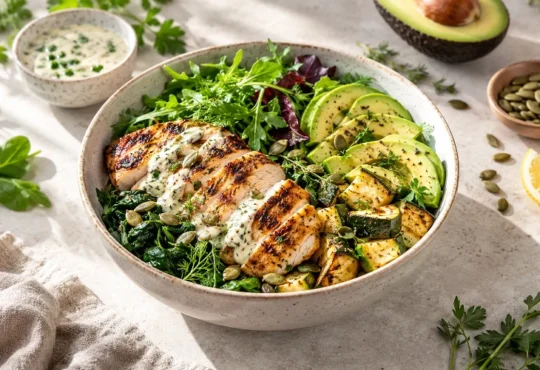
3. Smoked Salmon and Avocado Breakfast Bowl
This breakfast feels more elaborate than it actually is.
Add smoked salmon to a bowl with half an avocado, cucumber, leafy greens, a boiled egg, lemon juice, black pepper, and fresh dill. There is almost no cooking if your eggs are already prepared.
The combination provides protein from salmon and eggs, while avocado contributes fat and fiber.
Fish also provides a different protein package than bacon, sausage, or other processed meats. The American Heart Association encourages regular fish and seafood intake as part of a heart-conscious protein pattern.
If smoked salmon is too salty for your preference, leftover baked salmon from dinner works just as well.
This is one of the easiest examples of advanced meal planning: dinner leftovers become tomorrow’s breakfast without tasting like leftovers.
4. Five-Minute Tofu and Vegetable Scramble
Eggs do not have to appear in every low-carb breakfast.
Firm tofu can be crumbled directly into a pan with spinach, mushrooms, zucchini, turmeric, garlic, and black pepper. Cook everything together for a few minutes and finish with avocado or sesame seeds.
Pre-chopping the vegtables the night before makes the process even faster.
The result is a savory, plant-based breakfast with protein and much more variety than a typical grab-and-go snack.
Harvard emphasizes that the quality of protein and fat matters in lower-carbohydrate diets, with healthier outcomes generally associated with choosing better-quality plant and unsaturated fat sources rather than relying heavily on animal fat and processed foods.
For workdays, cook two portions at once and refrigerate tomorrow’s breakfast.
That turns a five-minute recipe into a zero-cooking breakfast the following morning.
5. Cottage Cheese, Cucumber, and Seed Bowl
Cottage cheese may not look exciting, but it becomes much more interesting once you stop treating it as something eaten alone.
Start with plain cottage cheese and add chopped cucumber, pumpkin seeds, avocado, herbs, cracked pepper, and a drizzle of olive oil.
You can also add a boiled egg if you want more protein.
The preparation takes roughly the same amount of time as pouring cereal into a bowl.
Cottage cheese brands can vary in carbohydrate, fat, and sodium content, so this is another situation where the Nutrition Facts label matters.
Pay attention to the serving size too. FDA guidance notes that serving sizes describe amounts people typically consume; they are not necessarily recommendations, and eating multiple servings multiplies the listed nutrients.
This breakfast travels well in a sealed container, making it especially useful for commuters.
6. Turkey, Egg, and Avocado Lettuce Wraps
When you need breakfast that can literally be eaten while walking out the door, lettuce wraps are difficult to beat.
Use large lettuce leaves and fill them with sliced boiled egg, avocado, tomato, and leftover roasted turkey or chicken. Add mustard, pepper, or herbs for flavor.
Roll everything tightly and store it in a reusable container.
Preparing several boiled eggs and cooked protein portions during weekend meal prep makes these wraps extremely convienient.
The American Heart Association recommends choosing lean, unprocessed poultry more often than processed meat products.
That distinction matters because “low-carb” does not automatically mean nutritionally ideal.
Turkey sausage and deli meat may fit a carbohydrate goal, but leftover roasted chicken or turkey often gives you more control over sodium, additives, and ingredients.
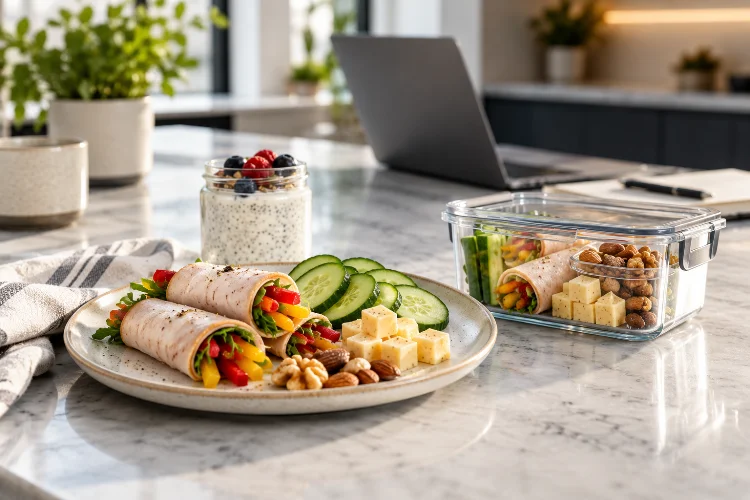
7. Emergency Breakfast: Eggs, Nuts, and Raw Vegetables
Some mornings will defeat your meal-prep system anyway.
That is why every realistic eating plan needs an emergency option.
Keep boiled eggs in the refrigerator and small portions of almonds or walnuts available. Add cucumber, celery, cherry tomatoes, or another lower-carb vegetable that requires almost no preperation.
There is nothing glamorous about this breakfast, but that is the point.
It takes two minutes and prevents a rushed trip through the bakery or vending machine.
The American Heart Association specifically recommends keeping hard-boiled eggs available as a convenient breakfast strategy and suggests preparing simple breakfast components in advance.
A reliable backup meal is often more useful than an impressive recipe you never have time to cook.
The Advanced Strategy: Prep Components, Not Seven Different Meals
The easiest way to make weekday breakfasts sustainable is to stop preparing completely different recipes every day.
Instead, prepare components.
Boil six eggs. Roast a tray of mushrooms and zucchini. Wash leafy greens. Cook chicken or salmon. Portion nuts and seeds. Keep plain yogurt, cottage cheese, avocado, and frozen berries available.
Then mix those ingredients differently throughout the week.
Monday might be egg muffins. Tuesday becomes yogurt with chia. Wednesday uses salmon and avocado, while Thursday turns leftover vegetables into a tofu scramble.
This approach reduces both cooking time and food waste.
It also makes nutritional variety easier. Harvard recommends consuming fiber from a range of plant foods rather than concentrating on one specific source.
Watch the Hidden Carbs in Convenient Breakfast Foods
Convenience is useful, but packaged breakfast products require some attention.
Protein bars, flavored yogurt, bottled smoothies, breakfast sausages, nut butters, and supposedly “healthy” breakfast drinks may contain added sugars or unexpectedly large carbohydrate portions.
Do not rely entirely on the front of the package.
Check Total Carbohydrate, Added Sugars, and serving size. The FDA specifically notes that added sugars are listed separately on Nutrition Facts labels and that packages can contain more than one serving.
For example, plain Greek yogurt with your own berries gives you much more control than a pre-sweetened fruit yogurt.
The same principle applies to sauces. Mustard, herbs, spices, olive oil, lemon, and vinegar can add plenty of flavor without automatically introducing the sugar found in some commercial dressings.
Keep Low-Carb Breakfast Nutritionally Balanced
Carbohydrate restriction should not become an excuse to remove vegetables, fiber, and nutritional variety.
Mayo Clinic notes that healthier low-carb approaches emphasize quality protein, healthy fats, fiber-rich foods, and limits on added sugars rather than focusing only on eliminating carbohydrates.
Try to include at least three useful components in breakfast: protein, a plant food, and a quality fat source.
For example, eggs plus spinach plus avocado create a more complete meal than eggs alone. Greek yogurt with chia and walnuts offers more fiber and texture than plain yogurt by itself.
Think in combinations rather than individual “keto foods.”
That small change makes weekday meals much easier to keep balanced.
The best advanced low-carb breakfast recipes for busy working mornings are not complicated recipes that require thirty minutes at the stove.
They are meals designed around preparation and flexibility.
Egg muffins, Greek yogurt bowls, salmon and avocado, tofu scrambles, cottage cheese bowls, and lettuce wraps can all be prepared quickly when the right ingredients are already available. A simple emergency breakfast prevents busy mornings from completely derailing the plan.
The trick is to prepare versatile components instead of cooking seven separate breakfasts.
Start this weekend by boiling a few eggs, washing vegetables, portioning nuts, and preparing one protein source.
When Monday morning arrives, your breakfast should already be easier than ordering one.