
Keto-Friendly Protein Sources Compared for Nutritional Quality
Protein is easy to find on a keto diet. Walk through almost any keto food list and you will see steak, eggs, chicken, cheese, salmon, bacon, and dozens of other low-carb options.
The harder question is whether all those foods are equally good choices.
They are not. Two foods can provide plenty of protein and almost no carbohydrates while having very different amounts of omega-3 fats, saturated fat, sodium, vitamins, minerals, and processing.
That is why comparing keto-friendly protein sources for nutritional quality can be much more useful than simply looking at carb counts.
A ketogenic diet is also not necessarily a high-protein diet. Traditional ketogenic patterns are generally very high in fat, very low in carbohydrates, and moderate in protein, although the exact proportions vary.
So instead of asking, “Which protein has zero carbs?” a better question is: Which protein gives me the strongest nutritional package for my meal?
Let’s compare the major options.
What Makes a High-Quality Keto Protein?
Carbohydrate content obviously matters when you are following keto, but it should not be the only factor.
A strong protein choice provides essential amino acids while also contributing useful nutrients such as vitamin B12, iron, zinc, selenium, calcium, or omega-3 fatty acids. Its fat profile and level of processing matter as well.
Harvard’s Nutrition Source describes this as the protein “package”—the other nutrients, fats, sodium, and compounds that arrive along with the protein itself.
Fish, poultry, nuts, soy foods, and other minimally processed options generally offer a different package from processed meats such as bacon, sausages, and deli meats.
For keto specifically, it also makes sense to favor foods that naturally contain little carbohydrate without depending heavily on ultra-processed “keto” products.
| Protein Source | Keto Fit | Main Nutritional Advantage | Main Consideration |
|---|---|---|---|
| Fatty Fish | Excellent | Protein + EPA/DHA omega-3 | Variety matters |
| Eggs | Excellent | Complete protein + micronutrients | Easy to over-rely on |
| Poultry | Excellent | Lean, versatile protein | Fat varies by cut |
| Shellfish | Excellent | Protein + minerals | Some options higher in sodium |
| Tofu/Tempeh | Good–Excellent | Plant protein + unsaturated fat | Carbs vary by product |
| Greek Yogurt | Good | Protein + calcium | Check lactose and added sugar |
| Lean Red Meat | Excellent | Iron, zinc, B12 | More saturated fat in some cuts |
| Processed Meat | Keto-Compatible | Convenient protein | Sodium and processing |
1. Fatty Fish: The Strongest Overall Keto Protein
If nutritional quality is the priority, fatty fish deserves a place near the top.
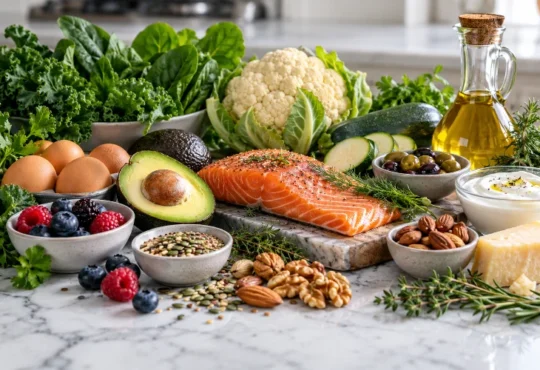
Salmon, sardines, mackerel, herring, and similar fish combine complete protein with very little carbohydrate and meaningful amounts of unsaturated fat. More importantly, they provide the long-chain omega-3 fatty acids EPA and DHA.
The National Institutes of Health notes that EPA and DHA are found mainly in fish and seafood, while conversion of plant-based ALA into EPA and DHA is limited.
That gives oily fish a major advantage over many other keto proteins.
The American Heart Association recommends regularly eating fish and seafood and specifically highlights fatty fish such as salmon, sardines, mackerel, herring, and anchovies as sources of omega-3 fats.
For a practical keto dinner, pair baked salmon with asparagus, spinach, or broccoli and olive oil. You get protein and fat without needing to cover everything in butter or heavy cream.
2. Eggs: Affordable, Flexible, and Nutrient-Dense
Eggs are almost perfectly designed for convenient low-carb eating.
They contain very little carbohydrate, provide high-quality complete protein, and are incredibly easy to use. Scrambled eggs, boiled eggs, omelets, egg salads, and vegetable frittatas can all fit comfortably into a ketogenic meal plan.
Eggs also provide nutrients beyond protein, which is why they are more nutritionally interesting than isolated protein powders or heavily processed meat snacks.
The American Heart Association lists eggs among useful protein sources and notes that healthy individuals can generally incorporate whole eggs into an overall healthy dietary pattern. Individual needs can differ, particularly for people managing abnormal blood lipids.
The main weakness of eggs is not their nutritonal quality—it is how easy it is to make them repetitive.
Instead of eating eggs with bacon every morning, combine them with mushrooms, spinach, avocado, herbs, or smoked salmon to diversify the meal.
3. Chicken and Turkey: Excellent for Protein Efficiency
Skinless chicken and turkey are useful when you want plenty of protein without automatically adding large amounts of fat.
That may sound strange on a high-fat diet, but having a lean protein source gives you more control over where your dietary fat comes from. You can pair chicken breast with avocado, olives, nuts, pesto, or extra-virgin olive oil rather than relying entirely on animal fat.
The American Heart Association recommends skinless poultry and lean, unprocessed meat as preferable choices when eating animal protein.
Chicken thighs and turkey thighs can also work on keto. They naturally contain more fat than breast meat, making them useful when you prefer richer meals.
The key distinction is often not chicken versus beef. It is minimally processed poultry versus breaded, sweetened, smoked, or highly processed versions.
A grilled chicken thigh is a very different protien choice from heavily processed chicken sausage containing added starches, sugars, and lots of sodium.
4. Shellfish: An Underrated Micronutrient Option
Shrimp, mussels, oysters, crab, and other shellfish tend to get less attention than salmon, but they can add valuable variety to keto meals.
Most shellfish provide substantial protein with relatively little carbohydrate. Depending on the species, they can also contribute minerals such as selenium, zinc, copper, and iron.
Mussels and oysters are especially interesting when your goal is dietary variety rather than eating chicken and steak every day.
Shellfish are also naturally quite lean, allowing you to choose the fat source that accompanies them. Shrimp sautéed in olive oil with garlic and zucchini, for example, creates a completely different nutrient profile from bacon and cheese despite both meals potentially fitting within keto macros.
Just pay attention to preparation. Breaded shrimp, sugary seafood sauces, and some processed seafood products can introduce considerably more carbs than plain seafood.
5. Tofu and Tempeh: Keto Can Include Plant Protein
Keto does not have to mean meat at every meal.
Tofu can be a useful low-carbohydrate plant protein, while tempeh provides a denser, fermented soy option. The exact carbohydrate and protein values vary depending on firmness, preparation, and brand, so checking the nutrition label is useful.
Harvard identifies soy as a nutrient-dense protein source and notes that it can be a useful alternative to red and processed meat.
Plant protein also helps diversify the types of fats and micronutrients in a keto diet.
Try crispy tofu with bok choy and sesame oil, or tempeh with cauliflower rice, avocado, and low-carb vegetables.
These options are especially useful if your keto menu has started looking like beef, chicken, eggs, repeat.
6. Greek Yogurt and Cheese: Useful, but Read the Label
Dairy creates an interesting keto problem.
Cheese is generally very low in carbohydrate, while yogurt can contain more lactose. Flavored yogurt may also contain substantial added sugar, turning an apparently healthy protein food into something that does not fit your carb target very well.
Plain Greek yogurt can offer an excellent combination of protein, calcium, and convenience. Choose unsweetened versions and compare labels because carbohydrate content varies between products.
Cheese can certainly fit too, but it works better as part of the meal than as the entire nutritional strategy.
A spinach omelet with some feta is one thing. Building most meals around piles of cheese, cream, and butter creates a very different fat profile.
When following keto, Harvard suggests emphasizing unsaturated fats such as those from nuts, seeds, avocado, plant oils, and oily fish rather than making saturated fat the default.
7. Red Meat: Nutrient-Rich, but Choose the Cut Wisely
Beef and other red meats offer some genuine nutritional advantages.
They provide complete protein along with nutrients such as iron, zinc, and vitamin B12. They are also naturally very low in carbohydrates, making them easy to fit into keto macros.
The issue is that different cuts can have dramatically different fat profiles.
Sirloin and round cuts, for example, are typically leaner choices than heavily marbled cuts. The American Heart Association recommends choosing lean or extra-lean meat and limiting highly processed options.
This does not mean steak needs to disappear from a keto diet. It means steak should be one part of a wider protein rotation.
Instead of eating fatty beef every evening, rotate beef with salmon, chicken, eggs, tofu, and shellfish. That simple varity can improve the overall nutritional profile without making meal planning difficult.
Processed Meats: Keto-Friendly Does Not Mean Nutritionally Ideal
Bacon, salami, hot dogs, deli meat, and sausages often look perfect on a keto nutrition label because their carb counts can be very low.
But zero carbs do not erase everything else on the label.
Processed meats are commonly higher in sodium and may contain more saturated fat depending on the product.
The American Heart Association recommends minimizing processed meats, while the American Cancer Society advises choosing fish, poultry, or plant-based proteins instead of red meat most of the time and eating processed meat sparingly, if at all.
There is nothing wrong with viewing bacon as an occasional ingredient rather than a primary protein source.
Use it to add flavor to Brussels sprouts or an omelet instead of automatically making half the plate bacon.
That distinction can make keto much more nutritionally sensible.
How to Build a Better Keto Protein Rotation
You do not need to identify one “perfect” protein and eat it forever.
A better strategy is rotation.
Have eggs with vegetables for breakfast, grilled chicken at lunch, salmon for dinner, tofu the following day, shellfish later in the week, and red meat occasionally. Plain Greek yogurt, nuts, seeds, and cheese can fill smaller supporting roles depending on your carbohydrate target.
This approach naturally spreads your intake across different amino acids, fats, minerals, and vitamins.
It also makes keto considerably more convienient to maintain because your menu does not depend on the same three foods every day.
Most importantly, look beyond macros. A food can technically fit your carb target while still being a poor everyday choice.
The best keto-friendly protein sources for nutritional quality are not simply the foods with zero carbohydrates.
Fatty fish stands out because it combines complete protein with EPA and DHA omega-3 fats. Eggs and poultry offer excellent versatility, while shellfish and soy foods add valuable nutritional diversity.
Lean red meat can contribute iron, zinc, and B12, but it makes sense to rotate it with other protein sources rather than relying on it exclusively.
Processed meats may fit keto macros, yet their low carb count does not automatically make them the strongest everyday option.
When planning your next meal, compare the entire protein package: protein quality, fat type, micronutrients, processing, sodium, and how the food complements the rest of your plate.
Start with variety, choose mostly minimally processed foods, and make your keto macros work for your nutrition—not the other way around.