Keto-Friendly Foods to Keep in Your Kitchen Every Day
Starting keto becomes much easier when the right ingredients are already waiting in your kitchen. When hunger strikes, having eggs, avocado, vegetables, fish, nuts, and a few useful pantry staples nearby can be the difference between making a quick keto meal and reaching for a high-carb convenience food.
The good news is that Keto-Friendly Foods do not have to be expensive, unusual, or complicated. A well-stocked keto kitchen can be built mostly around familiar whole foods that provide protein, fat, fibre, vitamins, and minerals.
A ketogenic diet is generally high in fat, moderate in protein, and very low in carbohydrates, encouraging the body to rely more heavily on fat and ketones for energy. The trick is choosing foods that fit those macronutrient goals without forgetting overall nutritional quality.
Start With Reliable Protein Sources
Protein is one of the easiest foundations for a keto meal. Keeping a few versatile options in your refrigerator or freezer means you can put together breakfast, lunch, or dinner without much planning.
Eggs are especially useful because they can become scrambled eggs, omelettes, boiled snacks, or part of a salad. Chicken, turkey, fish, seafood, and tofu can also provide practical protein options.
Fatty fish such as salmon is particularly useful because it provides protein along with unsaturated fats. The American Heart Association recommends choices such as fatty fish, nuts, seeds, and liquid plant oils when replacing foods high in saturated fat.
You do not need to build every keto meal around bacon or fatty red meat. Variety makes the diet more interesting and can help you build a more balanced eating pattern.
Fill the Fridge With Low-Carb Vegetables
One of the biggest keto mistakes is assuming vegetables should disappear because they contain carbohydrates.
Instead, focus on non-starchy and lower-carbohydrate vegetables. Cleveland Clinic’s ketogenic meal planning materials include vegetables such as broccoli, cauliflower, cucumber, peppers, asparagus, leafy greens, spinach, tomatoes, courgette and cabbage among lower-carb options.
These vegetables make an excellent base for salads, stir-fries, soups, casseroles, and side dishes.
For example, cauliflower can replace rice in some meals, courgette can be turned into noodles, and leafy greens can make a quick salad alongside chicken, fish, eggs, or tofu.
Vegetables also provide something that can easily become limited on a poorly planned keto diet: dietary fibre. Mayo Clinic notes that fibre is part of carbohydrates that the body does not digest in the same way as sugars and starches.
Keep Healthy Fats Within Easy Reach
Fat plays a major role in ketogenic eating, but the type of fat you choose still matters.
Olive oil is one of the simplest ingredients to keep in the pantry. Use it for salad dressing, roasting vegetables, or finishing cooked dishes. Avocado and avocado oil can also work well in many keto meals.
Harvard’s review of ketogenic diets notes that keto can be modified to emphasise foods lower in saturated fat, including olive oil, avocado, nuts, seeds, and fatty fish.
That is a useful distinction because “high fat” does not have to mean adding unlimited butter, cream, or processed meat to every meal.
The American Heart Association similarly recommends replacing saturated fats with unsaturated fat sources such as non-tropical plant oils, fish, nuts, and seeds.
Stock Nuts and Seeds for Quick Snacks
When you want something crunchy, nuts and seeds can be extremely convenient.
Almonds, walnuts, pecans, chia seeds, flaxseeds, and other varieties can work in low-carbohydrate eating patterns. Harvard also identifies nuts and seeds among commonly used sources of unsaturated fat.
Keep portions reasonable, though. Nuts are easy to eat straight from the container, which means a quick handful can quietly turn into several servings.
Seeds can be even more versatile. Chia seeds can be used in low-sugar puddings, flaxseed can be mixed into recipes, and pumpkin or sunflower seeds can add texture to salads.
When buying packaged nuts, check the label. Honey-roasted, candied, chocolate-coated, or heavily flavoured varieties may contain added sugars and extra carbohydrates.
Choose Keto-Friendly Dairy Carefully
Cheese, yoghurt, cream, and other dairy products appear frequently in keto recipes, but their carbohydrate and saturated-fat content varies.
Cleveland Clinic includes unprocessed cheeses such as cheddar, Gouda, Parmesan, and goat cheese among foods that may fit a ketogenic eating pattern.
Plain, unsweetened yoghurt may also fit certain low-carb plans depending on the serving size and carbohydrate content. The important word here is unsweetened. Flavoured yoghurts can contain substantial amounts of added sugar.
Read nutrition labels rather than assuming something is keto simply because it is dairy.
Cheese can certainly make vegetables and eggs more enjoyable, but it does not need to become the main ingredient in every meal.
Build a Small Keto Pantry
Your pantry does not need to look like a specialist health-food shop.
Olive oil, canned tuna or salmon, nuts, seeds, herbs, spices, vinegar, unsweetened nut butter, and shelf-stable low-carb ingredients can cover plenty of everyday meals.
Frozen foods are also worth keeping around. Frozen broccoli, cauliflower, spinach, fish, chicken, and other minimally processed ingredients can be lifesavers when you do not have time to cook from scratch.
Be more cautious with products marketed specifically as “keto.” Cookies, bars, cereals, desserts, and packaged snacks may carry keto-style branding while still being heavily processed.
The front of the package is advertising. The nutrition label is where you discover what you are actually buying.
Make Avocados a Keto Kitchen Regular
Avocado has almost become a symbol of keto, and there is a practical reason for its popularity.
It provides fat while also fitting easily into salads, eggs, bowls, dips, and quick snacks. Harvard lists avocado alongside olive oil, nuts, seeds, and tofu as sources of unsaturated fat that can fit ketogenic diets.
Mash avocado onto a plate with eggs for breakfast, slice it over chicken salad at lunch, or turn it into guacamole for a simple snack.
If fresh avocados regularly become overripe before you use them, frozen avocado pieces can be a convenient alternative where available.
Do Not Forget Herbs, Spices, and Flavour
Eating low carb does not mean eating boring food.
Garlic, pepper, chilli, paprika, cumin, oregano, rosemary, basil, curry spices, lemon juice, and fresh herbs can transform basic ingredients without requiring a complicated recipe.
A simple piece of chicken tastes completely different when seasoned with paprika and garlic than it does with rosemary and lemon. This variety matters when you are trying to maintain an eating pattern for more than a few days.
Watch bottled sauces and marinades, however. Some contain added sugars or starches, so check the carbohydrate information on the label.
A kitchen filled with flavour makes it much easier to rely on whole foods instead of constantly searching for packaged keto substitutes.
Building a useful keto kitchen is less about buying dozens of specialist products and more about keeping versatile whole foods available.
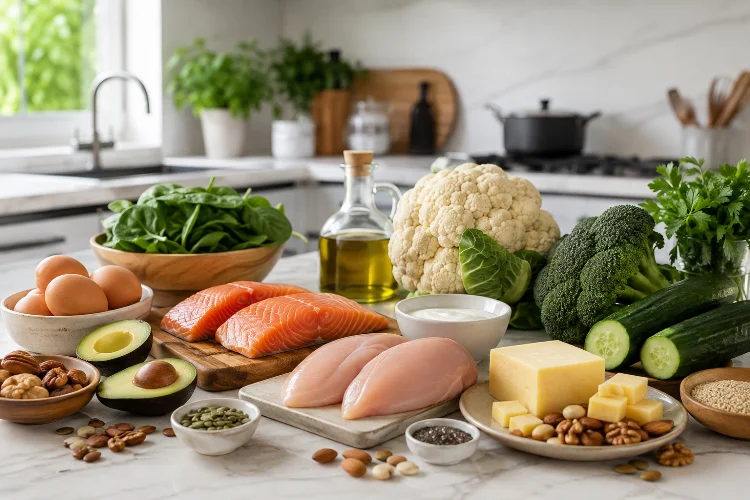
Some of the best Keto-Friendly Foods include eggs, fish, poultry, avocado, olive oil, nuts, seeds, low-carb vegetables, and carefully selected dairy products. Together, these ingredients can create dozens of simple breakfasts, salads, snacks, and dinners.
Food quality still matters even when carbohydrates are low, so favour nutrient-rich ingredients and unsaturated fats rather than relying heavily on highly processed foods and saturated fat.